
Kentucky Regional Poison Center Report on Accidental Poisoning
 In a 2001 study conducted by the Kentucky Regional Poison Center and reported in the medical journal Pediatrics1, Henry Spiller, MS, and George Rodgers, MD, demonstrated the real value of giving activated charcoal in the home to children as an antidote for most poisons. The authors noted that activated charcoal is recognized as the treatment of choice when it comes to neutralizing the effects of swallowing multiple poisons.2,3 [But, its] “use in the home has been limited by concerns that parents would not administer it properly, and that children would refuse to take activated charcoal.”
This study, in which activated charcoal was recommended to be given to children in the home, was conducted over eighteen consecutive months and followed 138 cases. Each case was tracked for three days after the emergency call to the Poison Center. Of the 138 cases, 115 (83%) were successfully treated in the home; eight of the mothers preferred to go to emergency; seven could not locate any charcoal in their area; and in six cases the pharmacy was closed for the night; and two could not be followed up.
The time from actually swallowing the poison to taking the activated charcoal was about 38 minutes (±18.3) for home treatment and 73 minutes (±18.1) for emergency department treatment. In 95% of home cases, charcoal was given within less than sixty minutes versus 33% for emergency department management. The average amount of charcoal administered was 12.1 grams. Half (6.9%) as many children who were treated at home vomited after being given charcoal versus those who received treatment in the emergency room (13%). There were no aspirations or other complications.
The authors of the study, Henry Spiller of Kentucky’s Regional Poison Center in Louisville and Dr. George Rodgers of the University of Louisville, concluded the obvious: administering activated charcoal in the home is a lot quicker than taking the time to get to the closest emergency room. But, they also said, “Greater efforts need to be put into educating parents about the need to stock activated charcoal in the home in advance of a poisoning.” Pharmacists and pediatricians, too, should be made aware that activated charcoal can be used effectively at home.
Other studies done in both America and Europe have confirmed that, “patients at home consistently received activated charcoal in less than one hour after ingestion.” In contrast, the majority of patients who were referred to the emergency department experienced a delay of well over an hour.4,5 CharcoalRemedies.com p. 74
Aspirin
The most common drug poisoning is from aspirin. In a study reported in the Journal of Toxicology – Clinical Toxicology6, researchers surveyed 76 poison control centers in North America to compare their recommendations for treating large, acute overdoses of aspirin.
Seven toxicologists were also surveyed for informal comparison. Even though there was considerable variation in the recommendations, it was obvious which was their first choice. Seventy-three centers (97%) recommended at least one dose of activated charcoal, as did six of the toxicologists (86%). Only four centers (5%) recommended syrup of ipecac and 38 (51%) recommended gastric lavage. None of toxicologists recommended either ipecac or lavage.
In the case of aspirin poisoning, charcoal should be given right away, or if possible, at least within the first thirty minutes. Powdered charcoal reaches its maximum rate of adsorption in the stomach within one minute. The sooner it is given, the better the chances of successful treatment. After one hour, charcoal given for fast absorbing drugs like aspirin is usually only about ten percent effective.
1. Spiller, Henry A, MS, DABAT, Rodgers, George C Jr, MD, PhD, Evaluation of Administration of Activated Charcoal in the Home,Pediatrics, Vol. 108 No. 6 December, 2001
2. Bond GR. The poisoned child. Evolving concepts in care, Emergency Medical Clinician, N. Am., 13:343-345, 1995
3. Chyka PA, Seger D. Position statement: single-dose activated charcoa1, American Academy of Clinical Toxicology; European Association of Poison Centres and Clinical Toxicologists, Toxicology Clinical Toxicology, 35:721-736, 1997
4. Lamminpaa A, Vilska J, Hoppu K, Medical charcoal for a child’s poisoning at home: availability and success of administration, Human Experimental Toxicology, 12:29-32, 1993
5. Wax PM, Cobough DJ, Prehospital gastrointestinal decontamination of toxic ingestions: a missed opportunity. American Journal of Emergency Medicine, 16: 114-116, 1998
6. Juurlink, DN, McGuigan, MA, Gastrointestinal decontamination for enteric-coated aspirin overdose: what to do depends on who you ask,Toxicology Clinical Toxicology, 38(5): 465-70, 2000
Intentional Poisoning
While accidental poisoning is serious enough, there is also the matter of intentional poisoning. Most often it is done under a medical license (as can be seen in the graph below) as a form of treatment for some otherwise common condition that results from just living. Sometimes it is supposed friendly fire*, sometimes it is outright evil. Whatever the reason, benign or nefarious, the result of poisoning is always negative to the body, mind and spirit. How comforting to know there is a God remedy that is universally accessible and affordable to rich and poor alike. For those who require some extra confirmation, the FDA lists activated charcoal as Category I “SAFE & EFFECTIVE” for poisoning. But to save yourself the need to take charcoal as a poison antidote why not be more proactive about your own health instead of depending on a Healthcare system that is broken and is no better prescribing drugs than most doctors were 200 years ago.
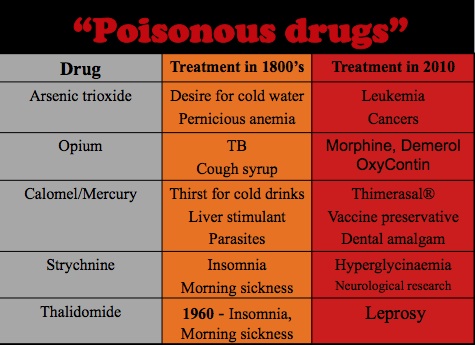
* 37% of recent war veterans are being treated for Post Traumatic Stress Disorder. And once diagnosed with PTSD, 80% are given a psychiatric drug. One in six American service members is on at least one psychiatric drug. Is it just coincidence that 23 soldiers and veterans are committing suicide every day. Since 2002, the suicide rate in the U.S. military has almost doubled. From 2009 to 2012, more U.S. soldiers died by suicide than from traffic accidents, heart disease, cancer and homicide.
Psychotropic Drugs are lethal weapons. But, again it is worth knowing that Activated Charcoal is the antidote for Psychotropic drugs (with the exception of Lithium). Do you have Activated Charcoal in your medicine cabinet along side all the potentially lethal drugs someone might accidentally take (or intentionally try to od on?). Don’t wait. Act now.
Charcoal Testimony
John is a minister, and while he believes very strongly in faith and its part in healing, he also believes one should heed the counsel to “add to one’s faith… knowledge” (2 Peter 1:5). For John and his wife Sharon that means understanding how to use simple natural home remedies.
“John and Sharon try to be prepared for any emergency. As a quick simple first aid, they always have charcoal near at hand. Because they were prepared for one emergency, they now know it really does work for aspirin poisoning. “It happened that a baby got a hold of a number of aspirins and swallowed them. Fortunately it was promptly noticed, and we immediately gave charcoal. For some time after giving the charcoal, we watched the baby carefully, and there were no observable side effects at all.” CharcoalRemedies.com p. 78
Can activated charcoal work for you in an emergency? It can if you follow the Kentucky Poison Control Center’s advice and stock activated charcoal, the antidote for hundreds of common drugs and chemicals, in your medicine cabinet. Then, if it should happen to one of your little ones or a neighbor’s, you can quickly give the antidote as you consider the need to go to Emergency. But what if there is no Emergency Clinic nearby?
“While doing development work in Nepal, just before the rainy season set in, the small clinic at which I worked hosted a week long “health camp”. A group of American doctors, dentists, and their spouses made the exhausting six-hour hike up and down, and finally over into the Huwas valley.
“After that very busy week, as some of the medical team rested up for the trek out, Joyce, the director’s wife, led a number of the others on a walk down to the river. On the way, they passed a family having a picnic beside a small Hindu shrine. The translator mentioned that the family lived just below the clinic. After stopping for tea in one village, Joyce decided to hike home by a different route. As they passed by the local health-post/pharmacy, the health worker called them over. A small, four-year-old boy was lying there not responding to anything. The group recognized him as one of the children at the family picnic. Joyce, herself a nurse, tells what happened:
“Among the group was a pediatrician. He examined the child and mentioned meningitis and a couple other serious possibilities as a cause for the child’s condition. Not able to confirm a diagnosis, the doctor decided to give a large dose of antibiotic by injection. It would take some time for the antibiotic to take effect, so we stood around observing the child, and conversing. At some point, I described a similar case, but it had been from poisoning. The baby had not been treated and had died. I suggested giving charcoal. After hearing my story, the physician agreed that this child could also be suffering from poisoning, “but poisoning from what?” he wondered. Nevertheless, he decided that charcoal was worth a try.
So I went to gather some coals from the nearest cook fires. We pulverized them as best we could and mixed the gritty powder in a four-ounce glass with water. We strained the mixture through a cloth and, because the child could not swallow, administered it through a small tube. We were able to get some down, and the child began to struggle against it. That encouraged us to keep trying, and eventually we were able to get about two ounces down. It was difficult to get it into the child because it was gritty and the tube was too small. As the others worked, another woman and I quietly offered a prayer that God would add His blessing to our efforts.
Very soon the child’s breathing, which had been shallow and irregular, returned to normal. We removed the tube, and before the child totally refused to take anymore, we were able to get one more ounce down. By then the boy was completely alert. From the time we were able to get the first bit of charcoal down to the time he was back up and running around was no more than five minutes. We were all absolutely amazed! The doctor insisted that it had to have been the charcoal, because the antibiotics could not possibly have worked so quickly.”
I hope those of you who are still skeptical never have to face such choices. But, by the time you’ve finished these pages and listened to those who have, I hope you will have enough evidence to try charcoal yourselves should an emergency arise. Faith is very powerful, but we need to add knowledge to our faith. CharcoalRemedies.com p. 34, 35
Dosages
What is the optimum dose of activated charcoal to be given in case of poisoning? There is no clear consensus among those promoting charcoal in cases of poisoning, except that you can’t give too much. There are no definite dosages, but in his book Activated Charcoal in Medical Applications, Cooney noted these three recommended formulas based on:
Age—25gms to 50 gms for children
Body weight—1gm per kg body weight
Amount poison taken—10 gm of activated charcoal per 1 gm of poison.7
7—Cooney, David O, ed. Activated Charcoal in Medical Applications, New York, NY: Marcel Decker; 163–184, 1995
One tablespoon of charcoal equals about ten grams. Fourteen capsules equal about a tablespoon of powder.
Although we do our best to keep dangerous substances away from our children, they still sometimes get hold of ‘sweets’, like aspirin/antipyretics, sleeping tablets or other drugs or ‘lemonades’, like silver polish, washing-up liquid, bleach, and insect repellent. So, an informed attitude to preparedness will mean including activated charcoal in your emergency kit. In addition to the powdered charcoal, you should have a bottle of capsules or tablets.
Poison Control Centers
In the United States the universal telephone number for the Poison Control Center is (800) 222-1222. Calls are routed to the local poison control center. In Canada the number can be found within the front cover of your phone directory. Of course, if your area has it, you can always call 911.
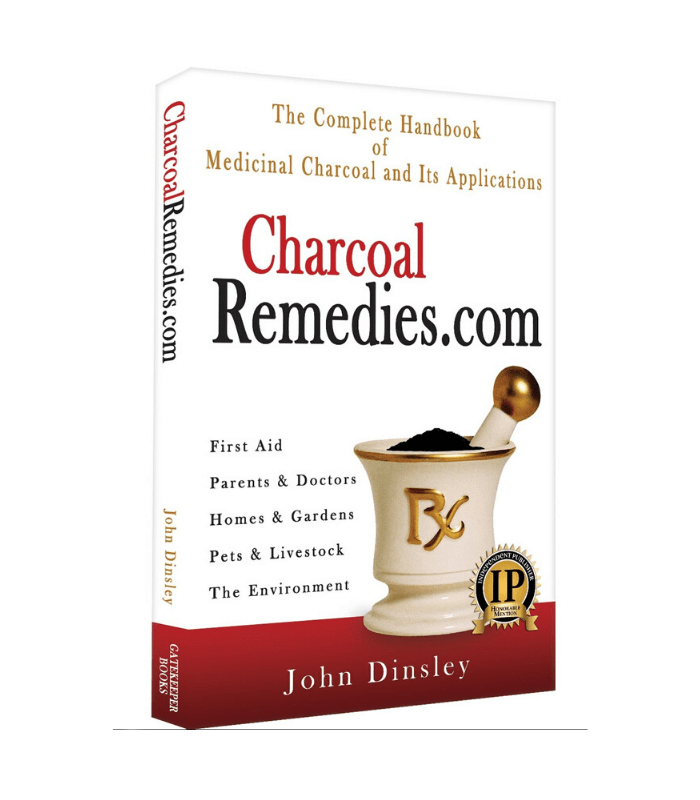
To find out more how charcoal can help you treat accidental poisoning from drugs, poisonous plants, or common household chemicals simply and naturally, right in your home, order the book CharcoalRemedies.com now.


10 Comments. Leave new
… [Trackback]
[…] Information on that Topic: charcoalremedies.com/accidental_poisoning/ […]
… [Trackback]
[…] Find More Information here to that Topic: charcoalremedies.com/accidental_poisoning/ […]
… [Trackback]
[…] Info on that Topic: charcoalremedies.com/accidental_poisoning/ […]
… [Trackback]
[…] Read More to that Topic: charcoalremedies.com/accidental_poisoning/ […]
… [Trackback]
[…] Find More on that Topic: charcoalremedies.com/accidental_poisoning/ […]
… [Trackback]
[…] Info to that Topic: charcoalremedies.com/accidental_poisoning/ […]
… [Trackback]
[…] Read More to that Topic: charcoalremedies.com/accidental_poisoning/ […]
… [Trackback]
[…] Read More Info here to that Topic: charcoalremedies.com/accidental_poisoning/ […]
… [Trackback]
[…] Information on that Topic: charcoalremedies.com/accidental_poisoning/ […]
… [Trackback]
[…] Find More Information here to that Topic: charcoalremedies.com/accidental_poisoning/ […]