
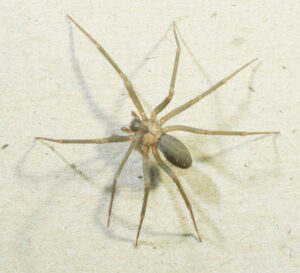
The brown recluse spider (BRS) produces a bite that gives little or no pain at first, but is extremely toxic. This creature, with the fiddle design on its head, is more to be feared than the black widow spider—which is more easily identified.
It would seem that most spider bites rarely cause serious injury, except in people whose immune system is compromised, such as the elderly, people with HIV/AIDS, cancer, diabetes, or other chronic diseases. Most spider bites are either painless or feel like minor burns.
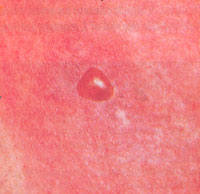
Initially, brown recluse spider bites cause redness. In those with compromised immune function, the puncture can begin to blister within several hours. Untreated, the area around the bite can begin to swell and tissue can begin to die. A blue-gray halo can develop around the bite. Other symptoms such as fever, malaise, rash, muscle aches, vomiting and diarrhea can occur.
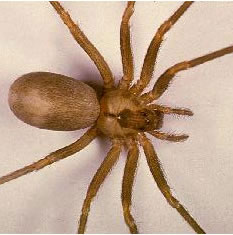
Within twenty-four hours a purplish-red blister develops at the site of the bite, and extensive tissue death occurs beneath the bite. This produces a very deep and angry ulceration that may extend down to the bone. The condition often lasts for weeks or months, and typically leaves a deep puckered scar. That is, if amputation or surgery does not become necessary.
There is no antidote and no truly effective anti-venom. The anti-venom must be administered within 24 hours, and in most cases it is only after 24 hours that the person realizes they are a victim of a recluse spider. So, in hopes of physically removing all of the poison, the treatment often resorted to is that of wide surgical excision—cutting away of any flesh containing venom. But there is safe and very effective natural remedy that has been used for centuries to treat poisonous insect bites including those of the recluse spider.
Activated Charcoal Neutralizes BRS Toxin
 Activated Charcoal is used around the world in hundreds of different applications to neutralizes hundreds of different poisons. Numerous cases have demonstrated that the same activated charcoal used in Hospital Emergency Rooms (ER) to adsorb accidental poisoning or drug overdose is equally effective in adsorbing the venom of poisonous snakes and poisonous insects including the brown recluse spider.
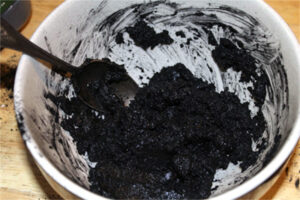
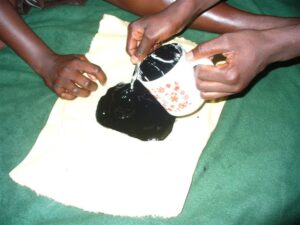
It has been found that a very effective and easy treatment for brown recluse spider bite is a charcoal poultice or compress. At the least suspicion of a BRS bite begin applying the charcoal. As with the anti-toxin, the sooner the better. For the first eight hours, change the compress about every thirty minutes. On the second day, the time interval for changing the poultices or compresses can be lengthened to two hours, and then to four. Below are testimonials from medical professionals, but remember to check out this amazing brown recluse spider bite story with before and after photos before you leave.
Doctor #1
Dr. Dana, NMD, told me over the phone, “I have never actually treated anyone with a bite from a black widow, but have treated several brown recluse spider bites. These are far more difficult to treat. I have seen people who required cosmetic surgery to repair the extensive tissue damage, and some people have recurring symptoms years later.
She went on to tell of an encounter a friend had with a brown recluse: “While teaching a course in Scottsdale I noticed a small ulceration on my friend’s leg. Maxine had not noticed it, but by the next morning it had gone from less than dime-size to quarter-size and had become angry and inflamed. A large open ulcer had developed, and she had enlarged lymph nodes in the groin. I immediately prepared a poultice, and placed it over the open ulcer. The poultice was replaced several times daily over the course of a week. Maxine also took a couple of herbal supplements and charcoal internally. By the second week there was no evidence of a bite at all.”
CharcoalRemedies.com page 112
Doctor #2
Dr. Martha, MD, works as an emergency room physician in a Kentucky hospital. “I use charcoal routinely for poisonings and drug overdoses. I have also ordered a charcoal poultice to be placed over toxic spider bites. We would soak some gauze with charcoal slurry and place that in a disposable hospital chuck [a flat rectangular pad with absorbent material on one side and plastic on the other], and tape it in place with the plastic side out. It worked very nicely on one brown recluse spider bite. I had the staff change it every thirty minutes.
“When another patient of mine called about her brown recluse spider bite, she too was open to using natural remedies. So, I directed her to a friend of mine who lived near her. The friend showed her how to apply a charcoal poultice. She did, and again it healed nicely. I have also used charcoal around our home for bee stings.”
CharcoalRemedies.com page 72
If an ER Doctor (and mother) knows how effective medicinal charcoal is that she has it on hand ready for home emergencies, would it not be wise on your part to have it in your home too!
Doctor #3
In their book Rx: Charcoal , the doctors Thrash include three experiences with brown recluse bites.
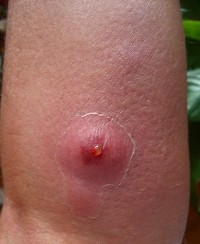 Case #1 “Our first case was a nurse, who recognized the spider and called for help. Charcoal poultices were applied and changed every thirty minutes through the night. The next morning, our hearts sank as we saw an angry, discolored, dime-sized blood blister at the site of the bite. But with prayer, we redoubled our efforts, and soon the swelling and discoloration began to subside. The following day it was decidedly better. The time intervals for changing the poultices was lengthened to two and then to four hours. After a week only a tiny, slightly red spot remained, which itched slightly; no slough occurred.”
Case #2 “Our second case was not as fortunate as the nurse. She knew that she had been bitten, but did not recognize the nature of the creature. Two days had passed before we saw her, and the area around the bite was swollen, discolored, and quite uncomfortable. Nevertheless, vigorous applications of the poultices and soaking in charcoal water prevented serious damage, and she had only a minimal slough, which healed in two weeks. Then she developed a tiny red hemmorhagic rash (angiitis) on her leg, which cleared in five weeks. She continued to have swelling for over six months.”
Case #3 “Our third case was a sixty-year-old man who called us from a Veterans Administration (VA) hospital. He had been bitten by a brown recluse spider two days before, having seen the spider and recognized it. He now had a large blood blister on his thumb just at the base, about the size of a dollar coin. There was extensive swelling of the entire thumb and forefinger, with purplish discoloration of his whole hand. In an attempt to save his hand, the VA surgeons offered him as their treatment of choice, the removal of his thumb and the fleshy mound of muscle and bone at its base right back to the wrist.
At that point he called us. We advised charcoal compresses changed every thirty minutes for the remaining eight hours of the day, and every two hours during the night. Three months later, he drove over to show us the results of following our advice. He had a shallow, elastic scar which did not interfere at all with the movement of his thumb! The very fact he had a thumb at all, would have caused the VA doctors to marvel.”
RX Charcoal pages 69-70
The Thrashes also tell the story of an anesthetist who attended one of their heath seminars. On hearing one of their case reports about a patient’s recovery from a brown recluse bite, he related his experience from the previous day. He had had to anesthetize a lady for the second time in two months so that a more extensive amputation could be done on her foot. She had been bitten by a brown recluse spider. The first amputation had not removed all of the damaged tissue, and the foot had failed to heal.
Would it not make good sense for you to have charcoal in your home just in case? It is like a fire extinguisher, you hope you never have to use one, but when there is a fire it is no time to think about buying one. You need to have charcoal in your home and you need to know how to use it.
Country Living
Emily has gained an experience with charcoal in a relatively short time and is certainly another one who qualifies to tell the merits of charcoal. She and her young family live out in the country and have a problem with spiders in their two-year old yard. She writes: “Because we have young children, and because I am sensitive to chemicals, we do not like to spray insecticide. Our spiders are not small, innocent ones. We have black widow and brown recluse on our property. Even in the summer, I ask the children to wear jeans and sneakers when they are out.
“One Sunday evening last summer, I decided to cut my son’s hair out in the backyard. Not wanting to get hair on my clothes, I wore shorts and sneakers. My son had jeans, sneakers, and no shirt. He was fortunate, but I was not. After finishing his hair, I moved his chair to clean it off, and a brown recluse jumped on my left leg. It bit me, and jumped away. This was my first spider bite encounter, and I did not really know what type of spider it was until I had confirmed it with several sources. I am a firm believer in medicinal charcoal, so I immediately put a small poultice on the bite. I kept it on until the next day, Monday, not knowing how serious this bite was.
“In the afternoon the bite still hurt a little, but I just put a bandage on it and went out to a ballgame with my son. When we got to the ballpark an hour later, my leg was hurting quite badly. I did not want to ruin my night out with him, so I tried to ignore it. By the end of game, I had a very dark red line running just about an inch up my leg from the bite site. When we finally made it home, I was in so much pain that I was surprised I had not stopped into the nearest emergency room. I quickly made up another, bigger, charcoal poultice and applied it. Very soon the pain began to ease. I changed the dressing twice a day for the next four days. Then I left it off to see if it felt better and it did. I will gladly share the cure with anyone else who needs it.”
CharcoalRemedies.com page 112, 114
Doctor #4
Dr. Churney, MD, relates his experience with a recluse spider bite: “Several years ago while working at Wildwood Hospital in Georgia, I attended a man from Pennsylvania who came in with a brown recluse spider bite on his leg. He had gone to emergency in Pennsylvania and had been told they would excise the muscle tissue around the bite. He left and drove down to Wildwood. He was treated with a charcoal and flax seed poultice over the bite. We alternated the poultice application with an improvised oxygen tent over the leg. We directed the oxygen right at the bite area. The poultice was changed twice daily. By the third day his leg had returned to normal.” CharcoalRemedies.com page 114
How fortunate it was that this man knew of this reputable hospital. But not everyone has access to a modern hospital ER, especially one that, in many cases, encourages the use of simple remedies as a first line of treatment. So, why not stock your home with medicinal activated charcoal so on Day 1 you can begin immediately treating any unknown insect bite? Why wait until Day 3 or Day 6 when there is no question but that you have a very serious case on your hands? Why wait until Day 9 when some doctor feels the only solution is to excise some tissue or worse, amputate? Some doctors are well informed but, here are some sobering pictures of one case of BRS bite where neither the victim nor his doctor new about using activated charcoal.
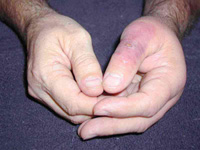
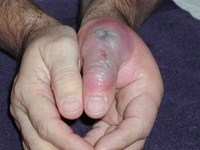
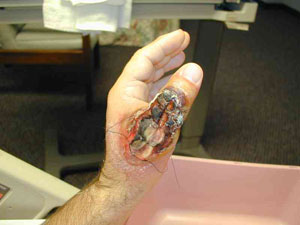
Why not get some charcoal today!
This man did!
On Vacation
Giorgio, age 52, gave us permission to post his experience. While visiting the Turks and Caicos Islands, he was bitten by a BRS. For over a week he spent more than five hours a day trying to find out all he could about his spider bite. During that time he took antibiotics as a precaution against infection, but was not too sure how well it worked. Here is what he wrote to his doctor:
“For the venom I started to use since 4-5 days a product that is NOT a drug (BROWN RECLUSE FIRST AID KIT), but works in a different way, “sucking ” the venom through the skin. It is activated charcoal in powder, I put on the lesion every one/two hours and I have to say that it worked very well, reducing the inflammation in both spots where I have the problem. The first spot is next to my hand, where the terrible spider has bitten me 10 days ago, the second I believe is a lymph node 20 centimeters from the original bite and started to swell more and more after 3 days from the bite. That’s the reason why I finally went to see a doctor (I was in the Caribbean area, Turks and Caicos); it was last Saturday and that doctor told me that was not a mosquito, as I thought, but the Brown Recluse. Despite that, he admitted that he had no clue how to heal it, but that probably it would have gone better after some weeks, and to take the antibiotic!… The truth is that he didn’t know because those spiders are anyway very unusual on those islands….

There are of course other lymph nodes that are harder and bigger than normal between the bite site and the big lymph node I am telling you about, but they don’t look that bad, and are not painful—just a little. That enlarged lymph node became very painful till 2 days ago [day 5], when it also started to ulcerate a little and so I started to put my black powder on it and on that area with good results—no more big pain—but still it is red all around. I think that the activated charcoal works well anyway, trying to get the venom outside through the skin, but the small capillaries remain closed ’cause of the action of venom and you don’t get oxygen to the tissue!!!”
Following the suggestion of a Doctor Burton, Giorgio sprayed the affected areas with nitroglycerine.
“After spraying the nitroglycerine I used to put also the charcoal and I have to say that finally things went OK, after a couple of more weeks. I DO believe that the charcoal helped a lot and it is the first real remedy that I found effective to fight against the bite. I would definitely suggest it to whoever has the bad chance to experience the same problem. After more than six months from the bite I have just a small scarring surrounded by a slightly darker pigmentation, both where I was bitten and where I had the enlarged lymph node.”
Giorgio
August, 2006
Czech Republic
Do not wait get some activated charcoal today!
READ MORE—GET THE BOOK! AVAILABLE IN ENGLISH AND SPANISH.
Brown Recluse Remedies FAQs
There is no antidote and no truly effective anti-venom. The anti-venom must be administered within 24 hours, and in most cases it is only after 24 hours that the person realizes they are a victim of a recluse spider. So, in hopes of physically removing all of the poison, the treatment often resorted to is that of wide surgical excision—cutting away of any flesh containing venom.
Activated Charcoal has been found that a very effective and easy treatment for brown recluse spider bite is a charcoal poultice or compress. At the least suspicion of a BRS bite begin applying the charcoal. As with the anti-toxin, the sooner the better. For the first eight hours, change the compress about every thirty minutes. On the second day, the time interval for changing the poultices or compresses can be lengthened to two hours, and then to four.
While all Activated Charcoals will adsorb Brown Recluse Venom, the smaller the particle size, the faster it will work. This product is our recommendation for best results.
Click here for a step by step video on how to make a charcoal poultice. You will need flaxseed, paper towels, water, and of course, activated charcoal.




9 Comments. Leave new
Receiving error message when trying to request ebook.
Thank you!
… [Trackback]
[…] Read More on to that Topic: charcoalremedies.com/brown_recluse/ […]
… [Trackback]
[…] Find More on that Topic: charcoalremedies.com/brown_recluse/ […]
… [Trackback]
[…] Here you will find 79286 more Info to that Topic: charcoalremedies.com/brown_recluse/ […]
… [Trackback]
[…] There you can find 4555 additional Information on that Topic: charcoalremedies.com/brown_recluse/ […]
… [Trackback]
[…] Information on that Topic: charcoalremedies.com/brown_recluse/ […]
… [Trackback]
[…] Here you can find 58697 additional Information on that Topic: charcoalremedies.com/brown_recluse/ […]
… [Trackback]
[…] Read More here to that Topic: charcoalremedies.com/brown_recluse/ […]
… [Trackback]
[…] Find More here to that Topic: charcoalremedies.com/brown_recluse/ […]