
When we think of “Nature,” the picture that comes to mind is often colored by our experiences. It might be beautiful scenery, peaceful retreats, exciting adventures, and intriguing mysteries. Or it may be spiders, wasps, bees, hornets, ants, scorpions, snakes, and poison ivy. How often childhood memories of being out in the country are “bitten” with painful recollections. But they need not end on a sad note. Charcoal is ready to take the sting out of our painful experiences, IF we have it ready at hand.

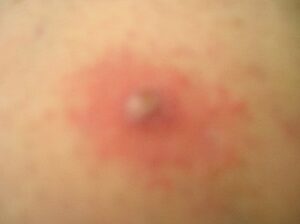
Aware of the dire results of some insect bites, Dr. Thrash takes no chances and makes sure that charcoal is never far away. She shared this personal experience: “My little grandchild accidentally sat down on a hill of fire ants. Instantly hundreds of ants began biting her. She screamed hysterically from the intense pain. We grabbed her, stripped off her clothing, and ran for a bathtub. As it filled with water, I added charcoal. After being submerged in that charcoal bath for less than two minutes, she stopped crying. The charcoal neutralized the poison, and her pain was gone. Charcoal has amazing healing properties. In fact, if I were stranded on a desert island, and could take only one thing along to protect me from disease, infection, and injury, I would choose charcoal.”
Now that is prevention in action. So for those of you who know you have severe sensitivities to insects or plants, it would be prudent to carry some charcoal with you on all your outdoor ventures. For those of you who are less sensitive, be sure to take some charcoal with you so you are prepared to help others, if need be. One never knows what might be lurking on a limb or under a leaf. CharcoalRemedies.com page 118
Bees, Hornets & Yellow Jackets
 Living in the country does expose one to more of nature’s insect traffic. Living in the country also tends to make people a little more independent. Because of time and distance to city services people often learn to wait and innovate. Natural remedies like charcoal fit very well with country living. But, come a long weekend, and countless thousands of city dwellers leave the city limits behind to visit their country cousins and enjoy the wide open spaces for themselves. Natural remedies like charcoal fit very well with city campers too.
I only met Jacob a couple of days ago. Because he is affiliated with a holistic health-conditioning center I once visited outside New York City, and because it has become a habit, I asked him if he had any charcoal stories. He said this experience came immediately to mind: “When I was in Georgia, a four-month old girl was bitten on her hand by a yellow-jacket wasp. In just a matter of seconds, I saw the arm turn purple, beginning from her hand and reaching all the way up her arm. I quickly made and applied a charcoal poultice to her entire arm and hand, and I gave her a charcoal slurry to drink. Slowly the color retreated from the biceps downward, until within about thirty minutes the color of her whole arm was back to normal.” No wonder he remembers the story!
Doctor Agatha Thrash MD (pathologist and, for forty-five years, Medical Examiner for the State of Georgia) knows how dangerous insects can be. “A three-year old girl was playing in her yard. Seeing a hole in the ground, her curiosity was piqued, and she stuck a stick into it. Out came a swarm of angry yellow jackets which immediately attacked her. Hearing her screams, her mother came running to the rescue. By that time the little girl was covered with the vicious insects. We later counted over fifty stings on her from the collarbones up. The frantic mother began to beat the wasps off, and in the process she got fifteen or twenty stings herself.
“Hearing the mother’s call for help, several people came running. They immediately took and placed the girl in a tub of cool water, covering everything except her nose and mouth, and stirred in several tablespoons of charcoal. They kept the girl in the tub for about thirty minutes. After cleaning her up, she seemed perfectly comfortable and was soon playing again. The mother, who had been too busy to care for her own stings, had marked swelling and pain that persisted for several days.”CharcoalRemedies.com page 115, 116
Dianne’s experience is that of most who have used this age-old remedy. She writes from British Columbia, Canada: “As for charcoal, we use it all the time. As you know I am Dean of Girls here at Fountainview Academy, and I wouldn’t be without charcoal. For upset stomachs, sore throats, earaches, and for most anything else that comes along, I hand out the charcoal or make charcoal poultices. They always work. As far as anything spectacular that I could tell you about, I can’t think of anything in particular. Well, just last Wednesday I took some girls shopping. On the way home we stopped for supper, and one of the girls got stung by a hornet. We really had nothing handy to take care of it, so she suffered until we got home. I then mixed up a warm charcoal poultice, and put it on her thumb. She kept it on overnight. The next morning the swelling had all gone, and she was feeling no more pain.” CharcoalRemedies.com page 91
Brown Recluse Spider
The brown recluse spider produces a bite that gives little or no pain at first, but is extremely toxic. This creature, with the fiddle design on its head, is more to be feared than the black widow spider—which is more easily identified. Within twenty-four hours a purplish-red blister develops at the site of the bite, and extensive tissue death occurs beneath the bite. This produces a very deep and angry ulceration that may extend down to the bone. The condition often lasts for weeks or months, and typically leaves a deep puckered scar. That is, if amputation does not become necessary. There is no antidote and no anti-venom. So, in hopes of physically removing all of the poison, the treatment often resorted to is that of wide surgical excision of any flesh containing venom.
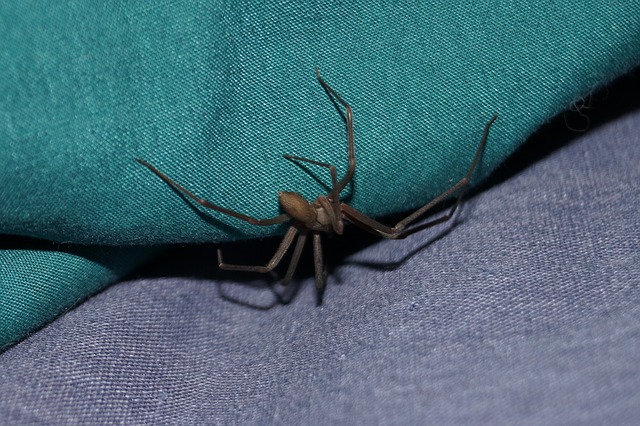
However, it has been found that a totally benign treatment for brown recluse spider bite is a compress of powdered charcoal. This should be applied as soon as possible after the bite happens, preferably during the first twenty-four hours. For the first eight hours, change the compress about every thirty minutes. On the second day, the time interval for changing the poultices or compresses can be lengthened to two hours, and then to four.
Dr. Martha, MD, works as an emergency room physician in a Kentucky hospital. “I use charcoal routinely for poisonings and drug overdoses. I have also ordered a charcoal poultice to be placed over toxic spider bites. We would soak some gauze with charcoal slurry and place that in a disposable hospital chuck [a flat rectangular pad with absorbent material on one side and plastic on the other], and tape it in place with the plastic side out. It worked very nicely on one brown recluse spider bite. I had the staff change it every thirty minutes.
“When another patient of mine called about her brown recluse spider bite, she too was open to using natural remedies. So, I directed her to a friend of mine who lived near her. The friend showed her how to apply a charcoal poultice. She did, and again it healed nicely. I have also used charcoal around our home for bee stings.” CharcoalRemedies.com page 72
Emily has gained an experience with charcoal in a relatively short time and is certainly another one who qualifies to tell the merits of charcoal. She and her young family live out in the countryside and have a problem with spiders in their two-year old yard. She writes: “Because we have young children, and because I am sensitive to chemicals, we do not like to spray insecticide. Our spiders are not small, innocent ones. We have black widow and brown recluse on our property. Even in the summer, I ask the children to wear jeans and sneakers when they are out.
“One Sunday evening last summer, I decided to cut my son’s hair out in the backyard. Not wanting to get hair on my clothes, I wore shorts and sneakers. My son had jeans, sneakers, and no shirt. He was fortunate, but I was not. After finishing his hair, I moved his chair to clean it off, and a brown recluse jumped on my left leg. It bit me, and jumped away. This was my first spider bite encounter, and I did not really know what type of spider it was until I had confirmed it with several sources. I am a firm believer in medicinal charcoal, so I immediately put a small poultice on the bite. I kept it on until the next day, Monday, not knowing how serious this bite was.
“In the afternoon the bite still hurt a little, but I just put a bandage on it and went out to a ballgame with my son. When we got to the ballpark an hour later, my leg was hurting quite badly. I did not want to ruin my night out with him, so I tried to ignore it. By the end of game, I had a very dark red line running just about an inch up my leg from the bite site. When we finally made it home, I was in so much pain that I was surprised I had not stopped into the nearest emergency room. I quickly made up another, bigger, charcoal poultice and applied it. Very soon the pain began to ease. I changed the dressing twice a day for the next four days. Then I left it off to see if it felt better and it did. I will gladly share the cure with anyone else who needs it.”
CharcoalRemedies.com page 112, 114
Scorpions

I met Sandra several years ago when I was working in Nepal. Sandra writes, “We have taught the use of charcoal in the treatment of poisonous bites and stings. One man had been climbing a tree, cutting leaves for his animals, when a scorpion stung him. One thing that the witchdoctors say is, that you should never kill the scorpion that stung you, or you will die and you should never drink water after being stung, or you will die. But this man killed the scorpion and then came quickly back to the village and met with a sister who knew how to use charcoal. She applied a charcoal poultice, and gave him some charcoal water to drink. Within an hour he was well.” CharcoalRemedies.com page 119
To find out more how charcoal can help you treat poisonous insect bites and other common ailments, simply and naturally, right in your home, order the book CharcoalRemedies.com now.



7 Comments. Leave new
… [Trackback]
[…] Read More Information here on that Topic: charcoalremedies.com/insect_bites/ […]
… [Trackback]
[…] Find More Info here to that Topic: charcoalremedies.com/insect_bites/ […]
… [Trackback]
[…] Info on that Topic: charcoalremedies.com/insect_bites/ […]
… [Trackback]
[…] Info on that Topic: charcoalremedies.com/insect_bites/ […]
… [Trackback]
[…] Read More Info here on that Topic: charcoalremedies.com/insect_bites/ […]
… [Trackback]
[…] Find More here on that Topic: charcoalremedies.com/insect_bites/ […]
… [Trackback]
[…] Read More on that Topic: charcoalremedies.com/insect_bites/ […]